Continuous Audit Readiness for Modern Accounting Teams
By DoDocs Editorial Team | November 11, 2026 | 6 min read
Key Takeaways
- Year-end audit scrambles are a structural failure, not operational noise. Relying on annual document gathering creates immense staff burnout, client friction, and compliance risks.
- Continuous audit trails require automated document linkage. Every transaction in the ledger must automatically bind to source invoices, receipts, and approval logs at the moment of entry.
- AI-driven validation eliminates sampling limitations. Rather than testing a 5% sample of transactions at year-end, continuous validation inspects 100% of supporting documents in real time.
For decades, audit preparation has been treated as a seasonal fire drill. As fiscal year-ends approach, accounting firms and corporate finance departments across North America plunge into a high-stress scramble to locate missing invoices, trace approval chains, and reconcile anomalous ledger entries.
According to the American Institute of Certified Public Accountants (AICPA) National Practice Management Survey, accounting teams spend upwards of 25% of their total billable hours during busy season engaged in administrative tasks, document chasing, and back-and-forth client communication. This reactive model not only inflates audit fees and strains client relationships, but also leaves finance teams vulnerable to missed errors and compliance oversights.
Modern finance leaders and accounting firm partners are shifting toward continuous audit readiness. By embedding automated document intelligence directly into daily bookkeeping and reconciliation workflows, organizations can maintain an audit-ready state every day of the year.
The Hidden Cost of the Annual Audit Scramble
The traditional approach to audit readiness is inherently retroactive. Throughout the year, transactions are entered into general ledgers while supporting documents—invoices, bank statements, purchase orders, and contracts—are scattered across email inboxes, local desktop folders, paper filing cabinets, and cloud storage repositories. When external auditors arrive or internal compliance reviews occur, staff must work backward through months of historical data to reconstruct audit trails.
Consider a mid-sized manufacturing firm in Illinois with $25 million in revenue and 150 employees. During their annual financial audit, auditors select a sample of 75 expense transactions from the third quarter. The controller and accounting staff must locate original vendor bills, proof of payment, line-item receiving slips, and manager sign-offs for each sampled transaction. Because documentation was saved across disparate folders without standardized naming conventions, the team spends over 35 hours searching email threads and vendor portals to satisfy a single audit request block.
This friction incurs several distinct costs:
- Staff Burnout and Turnover: Compounding busy-season workloads with manual document retrieval contributes directly to practitioner fatigue during peak periods.
- Fee Write-Downs and Scope Creep: CPA firms managing audits or client books lose billable margins when senior accountants spend non-billable hours hunting down misplaced receipts.
- Delayed Financial Statements: Prolonged document collection delays month-end and year-end closes, impairing executive decision-making and investor reporting.
What Continuous Audit Readiness Actually Means
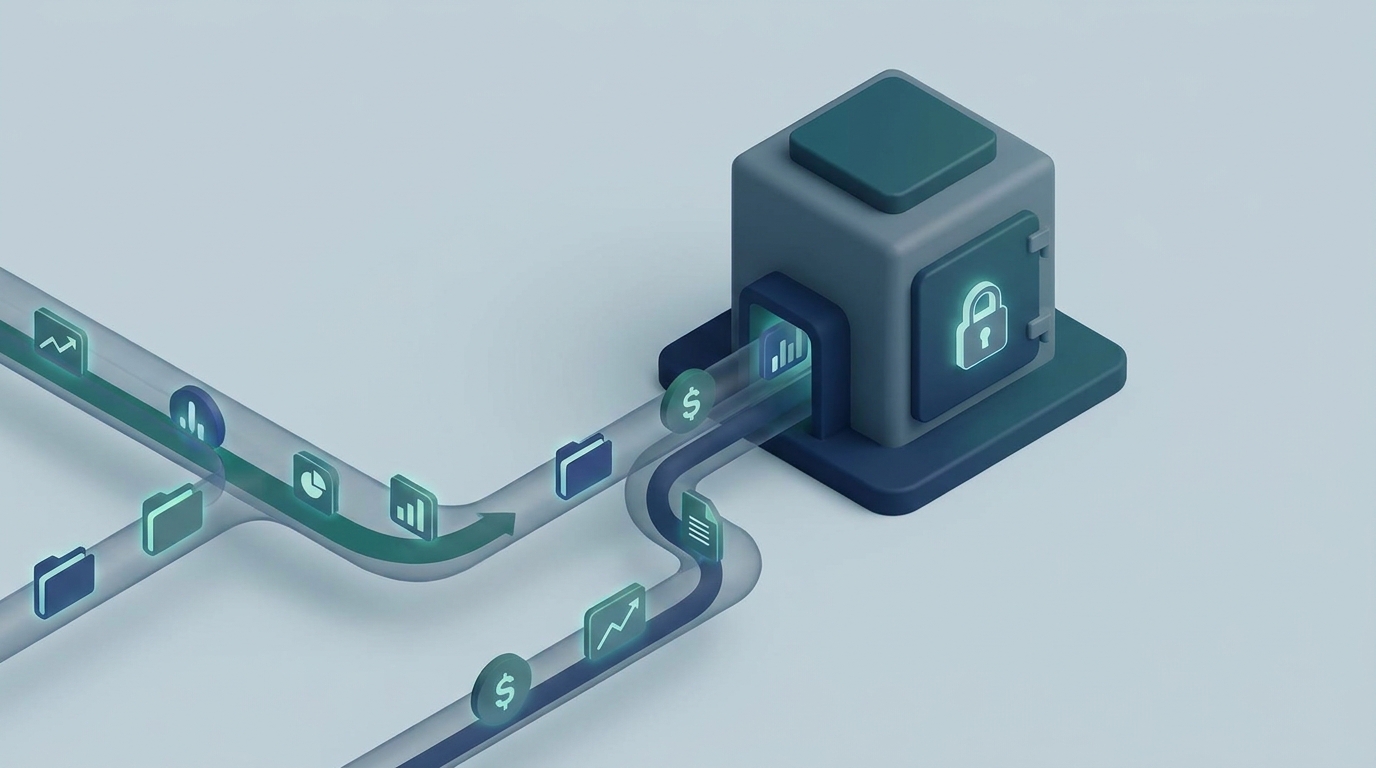
Continuous audit readiness replaces retroactive forensic gathering with real-time, event-driven documentation. In a continuous audit model, no ledger entry exists in isolation; every journal entry, AP transaction, and AR posting is permanently bound to its underlying source documentation, approval metadata, and validation checks at the precise moment of creation.
Continuous auditability rests on three functional pillars:
- Immutable Document-to-Transaction Binding: Source files (PDF invoices, digital receipts, contracts) are programmatically linked to specific ledger entries, creating a two-way traceable connection between general ledger lines and original documents.
- Automated Exception Detection: Rather than waiting for year-end sampling to uncover discrepancies, intelligent systems continuously cross-check document totals, line-item tax details, vendor TINs, and payment terms against general ledger entries as transactions are processed.
- Context-Rich Audit Logs: System actions, extraction confidence scores, user approvals, and timestamped edits are automatically recorded in an unalterable log, providing auditors with complete line-of-sight into how each number was established.
For an accounting firm managing bookkeeping for 40 client entities, continuous audit readiness transforms daily operations. When a client submits a vendor invoice via email or portal upload, the system extracts key metadata, verifies ledger coding against historical rules, checks for duplicate payments, and attaches the original PDF directly to the transaction record in the accounting software. If a receipt is missing or an invoice total differs from a purchase order, an automated alert is triggered immediately—when the transaction is fresh—rather than nine months later during audit sampling.
Architectural Shift: From Static Repositories to Intelligent Ledgers
A primary barrier to continuous auditability has been reliance on static document storage systems. Tools like Google Drive, Dropbox, or traditional server folders serve as digital filing cabinets; they store files passively but possess no understanding of financial context or ledger structures.
Searching for a specific vendor invoice in a nested directory (2026/Clients/Acme/Q3/Invoices/Unprocessed) requires human memory and manual keyword matching. If a file is misnamed or saved in the wrong folder, it is functionally lost until an audit forces a manual search.
An AI-native Accounting Operating System fundamentally changes this architecture by converting static files into structured, queryable financial entities. When a document enters the system:
- Semantic Document Processing: The system reads multi-page invoices, receipts, and bank statements, identifying complex tables, line items, payment terms, and vendor details regardless of formatting.
- Automated Ledger Alignment: Extracted data is matched against the chart of accounts, vendor registries, and open purchase orders in real time.
- Bi-Directional Indexing: Audit software and internal users can query the ledger by transaction ID, document text, vendor name, or anomaly flag, instantly pulling up both the entry and its verified source file.
Consider an accounts payable team processing 500 vendor invoices each month across multiple locations. Under a traditional workflow, staff spend hours re-keying invoice data into the ERP and manually uploading attached PDFs to cloud folders. Under an intelligent ledger framework, invoices are parsed automatically, matched to purchase orders, and linked to the resulting ledger entry with a verified audit link. When auditors request supporting records for AP balances, the controller generates an export containing all 500 ledger lines complete with hyperlinked source documents, cutting audit response time from days to minutes.
Preparing Your Team and Workflows for Continuous Auditability
Transitioning from seasonal audit fire drills to continuous audit readiness requires deliberate updates to internal workflows and client interactions. CPA firm partners and corporate CFOs can implement continuous auditability through four practical steps:
1. Standardize Document Ingestion Channels
Eliminate scattered file transfers by establishing centralized, automated entry points for all financial documents. Whether documents arrive via email, vendor portals, mobile uploads, or direct EDI feeds, direct them through a unified processing pipeline. This ensures 100% of incoming documents pass through initial audit metadata tagging before entering the ledger.
2. Enforce Real-Time Exception Resolution
Shift document chasing from a year-end activity to an immediate operational rule. When an invoice is missing required supporting documentation (such as a receiving slip or manager sign-off), flag the entry automatically and notify the responsible manager or vendor within 24 hours. Resolving discrepancies while details are fresh eliminates the cold-case investigations typical of busy season.
3. Establish Continuous Compliance Validation
Incorporate automated checks for regulatory and reporting requirements. For example, verify vendor W-9 status and Taxpayer Identification Numbers (TINs) automatically upon invoice receipt, or cross-check sales tax calculations against jurisdiction rules. Identifying compliance gaps immediately prevents costly adjustments during tax filing and financial reporting.
4. Provide Auditors with Self-Service Access
During internal or external audits, provide review teams with read-only access to transaction-bound audit logs. When auditors can independently verify source documents, extraction logs, and approval timestamps directly alongside ledger entries, audit turnaround times drop significantly, and billable auditor hours are minimized.
The Strategic Advantage of Audit-Ready Operations
Continuous audit readiness is more than a compliance safeguard; it is a fundamental operational advantage. Accounting practices that eliminate document chasing free up senior staff to focus on strategic client advisory services, higher-value advisory engagements, and firm growth. For corporate finance teams, maintaining continuous visibility over documentation improves working capital management, accelerates month-end closes, and builds stakeholder confidence.
By replacing legacy folder structures and manual document retrieval with intelligent, transaction-linked workflows, finance teams can finally end the annual audit scramble and operate with total ledger clarity year-round.
More articles
Eliminating Month-End Reconciliation Bottlenecks
By DoDocs Editorial Team | November 9, 2026 | 5 min read
Solving Document Chasing in Modern Accounting Firms
By DoDocs Editorial Team | November 6, 2026 | 6 min read
Real-Time Cash Visibility & Daily Reconciliation
By content-writer | November 9, 2026 | 5 min read